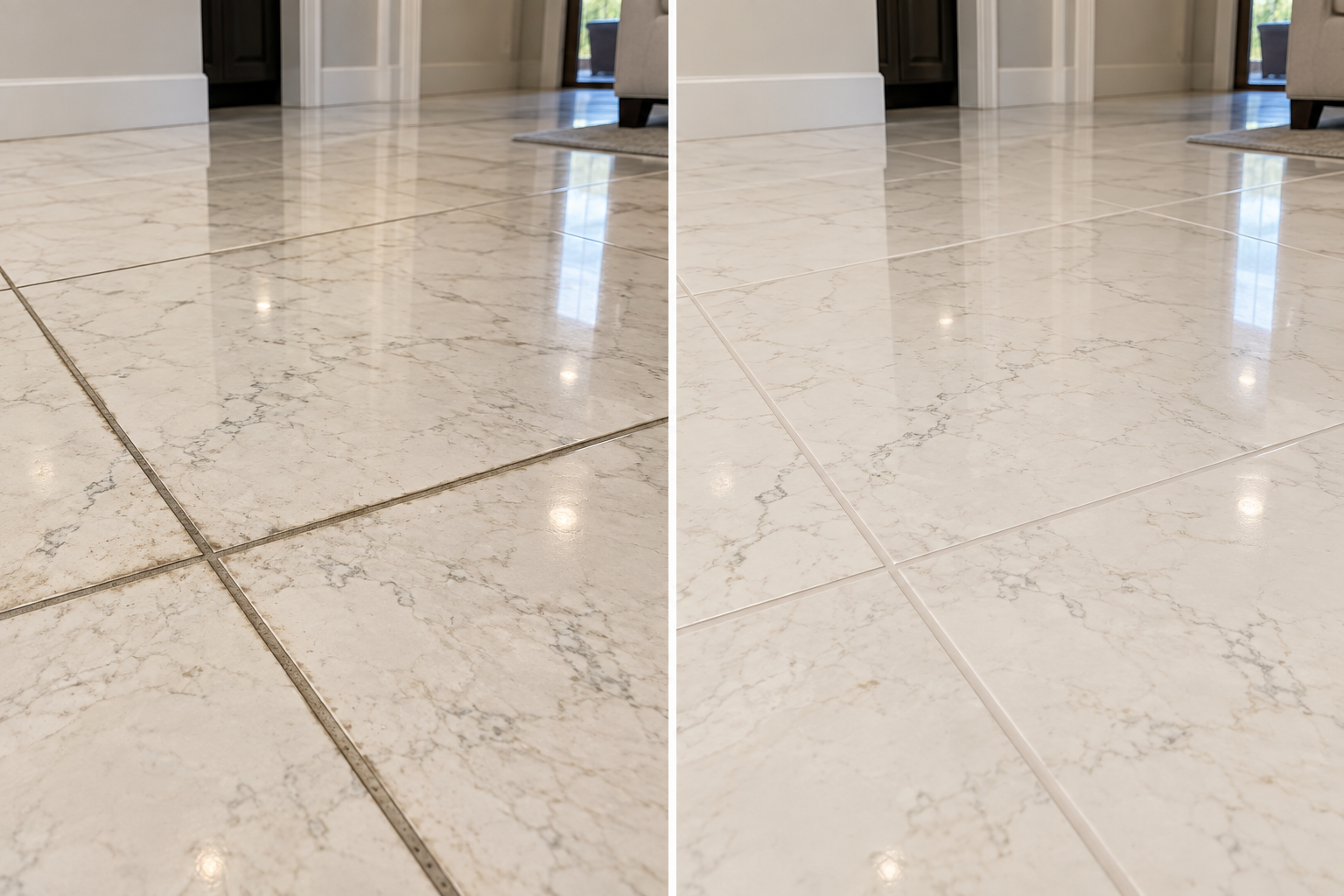
Color sealing works on grout that is discolored but structurally sound, and grout that is cracked or crumbling needs repair first. This post covers the observable signs that decide which one you have, plus the difference between sealing, color sealing, and grout repair.
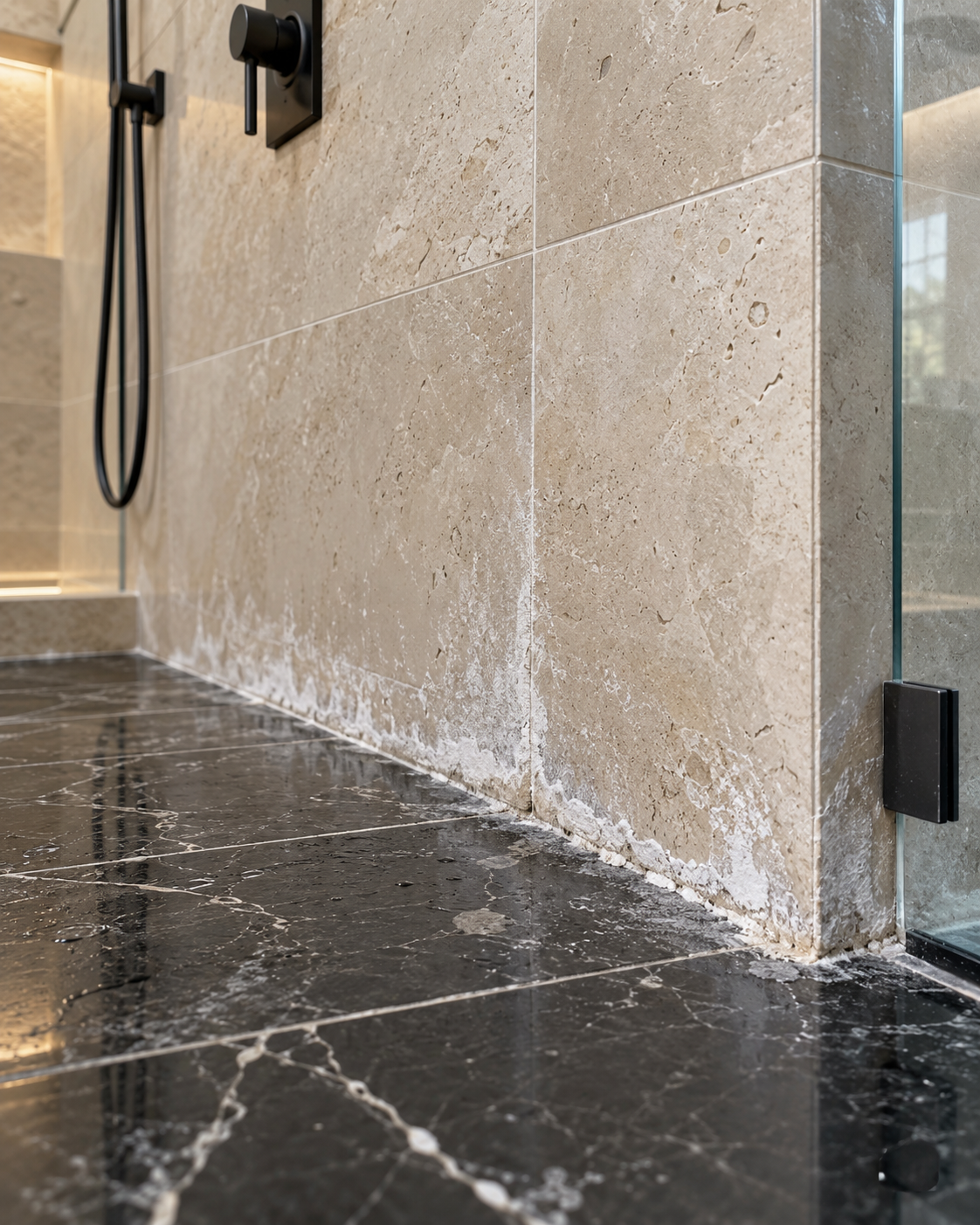
Four different things show up as white on shower tile, and each needs a different answer. This post gives a homeowner-usable tell for calcium buildup, soap scum, efflorescence, and etching, and it is honest about how much can safely come off a stone shower.

Saltillo is fired clay, not stone, and its shine comes from a topcoat rather than the tile. Outdoors that coating breaks down, clouds white, and lifts, and the old film has to come off before anything new goes on.
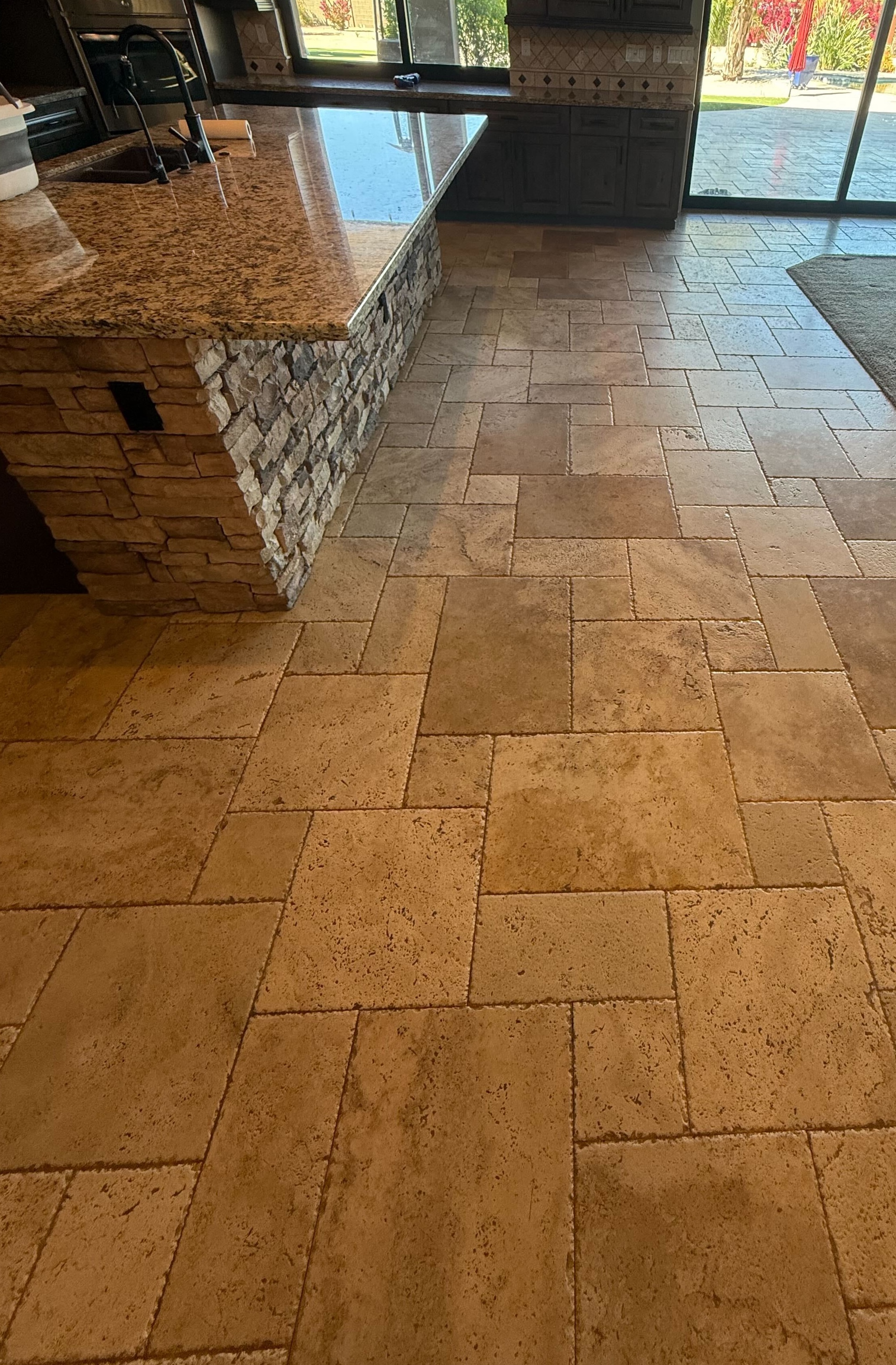
Travertine holes are natural formation, not damage. The real question is whether your floor was installed unfilled on purpose or has lost its factory fill, because the answer changes the recommendation.
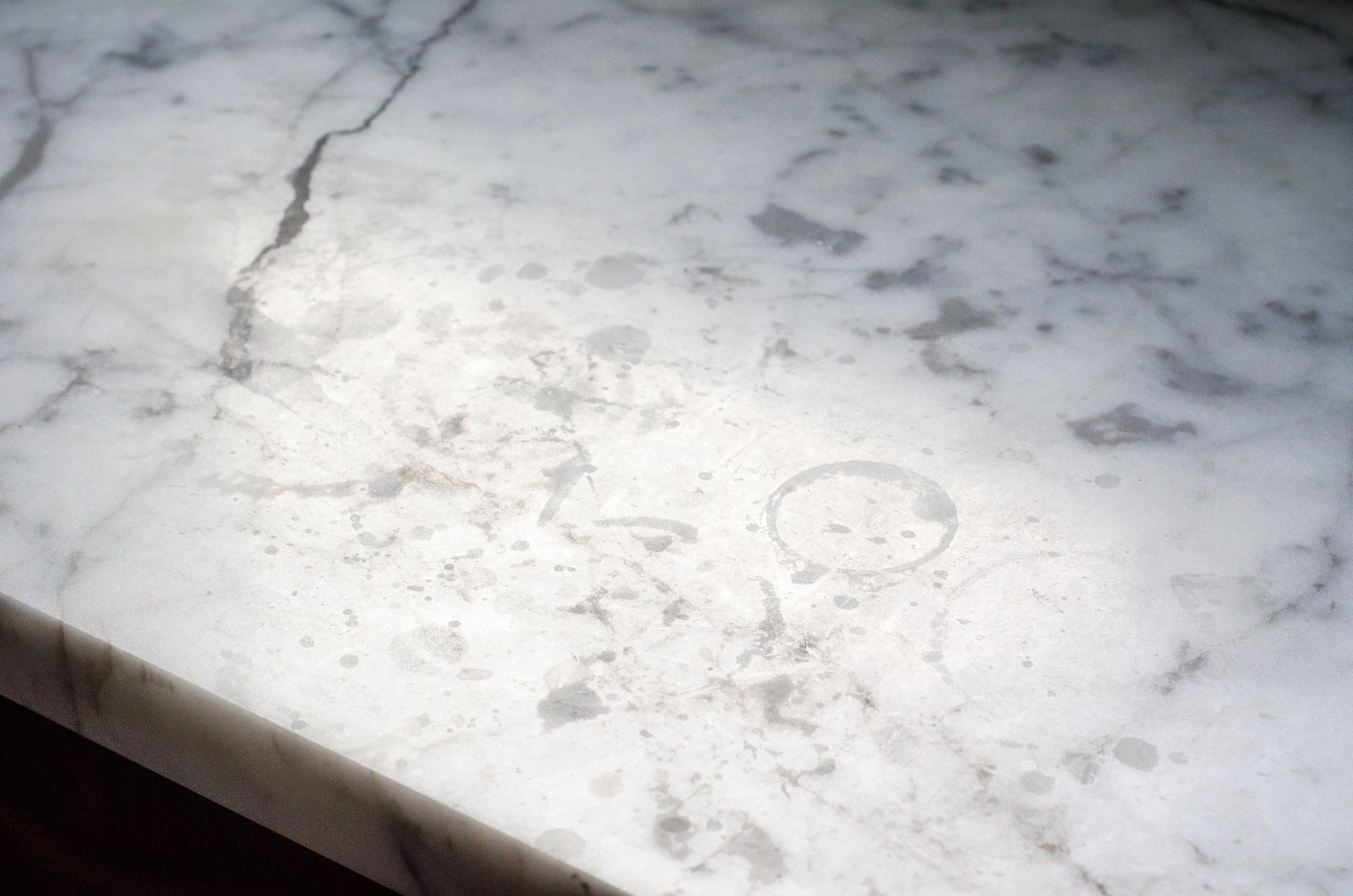
Most water spots on a marble countertop are etch marks, not spots. A ten-second check separates an etch from calcium buildup and from a stain.
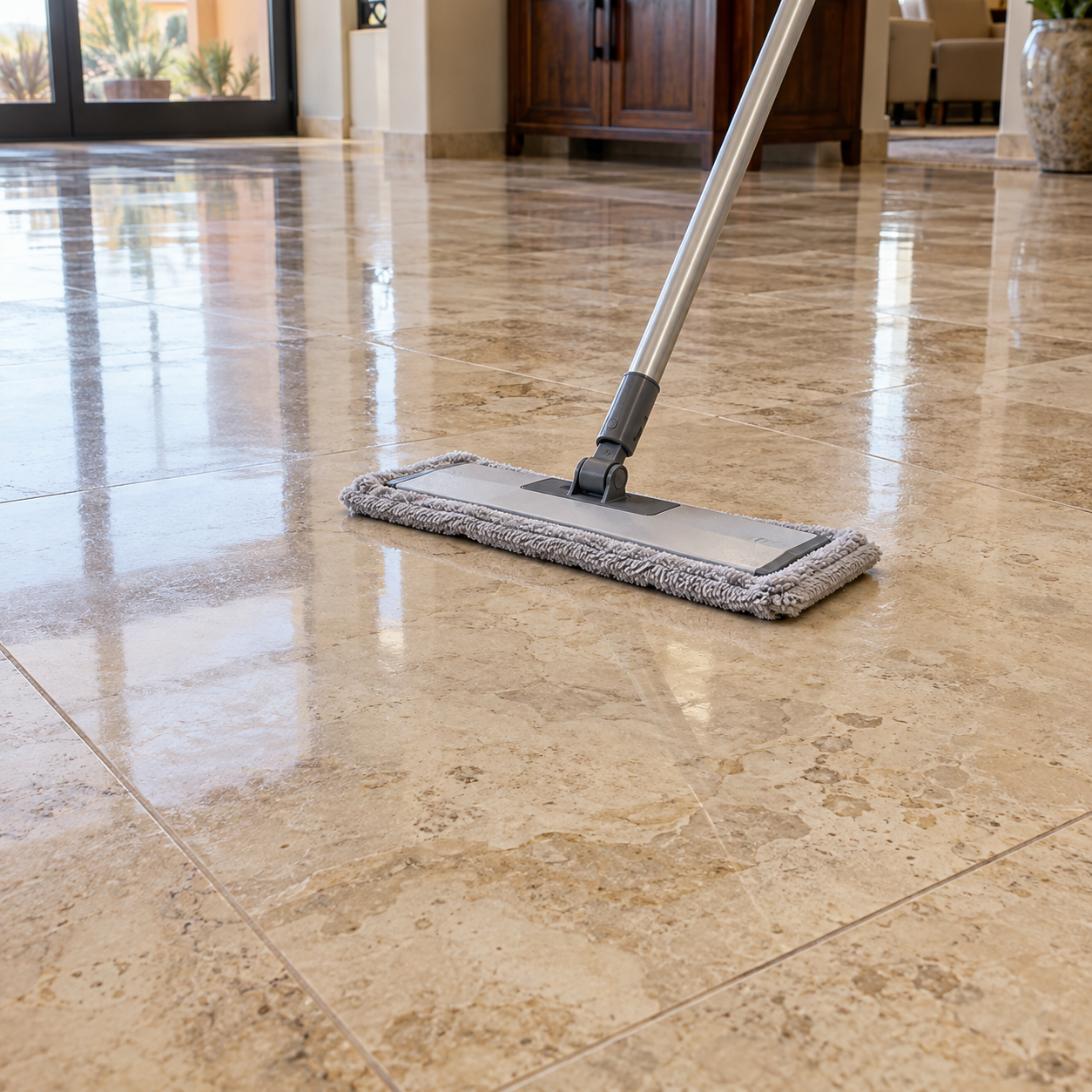
Which mop to use on travertine, which ones quietly damage it, and why Scottsdale water leaves a haze that mopping alone will not fix.
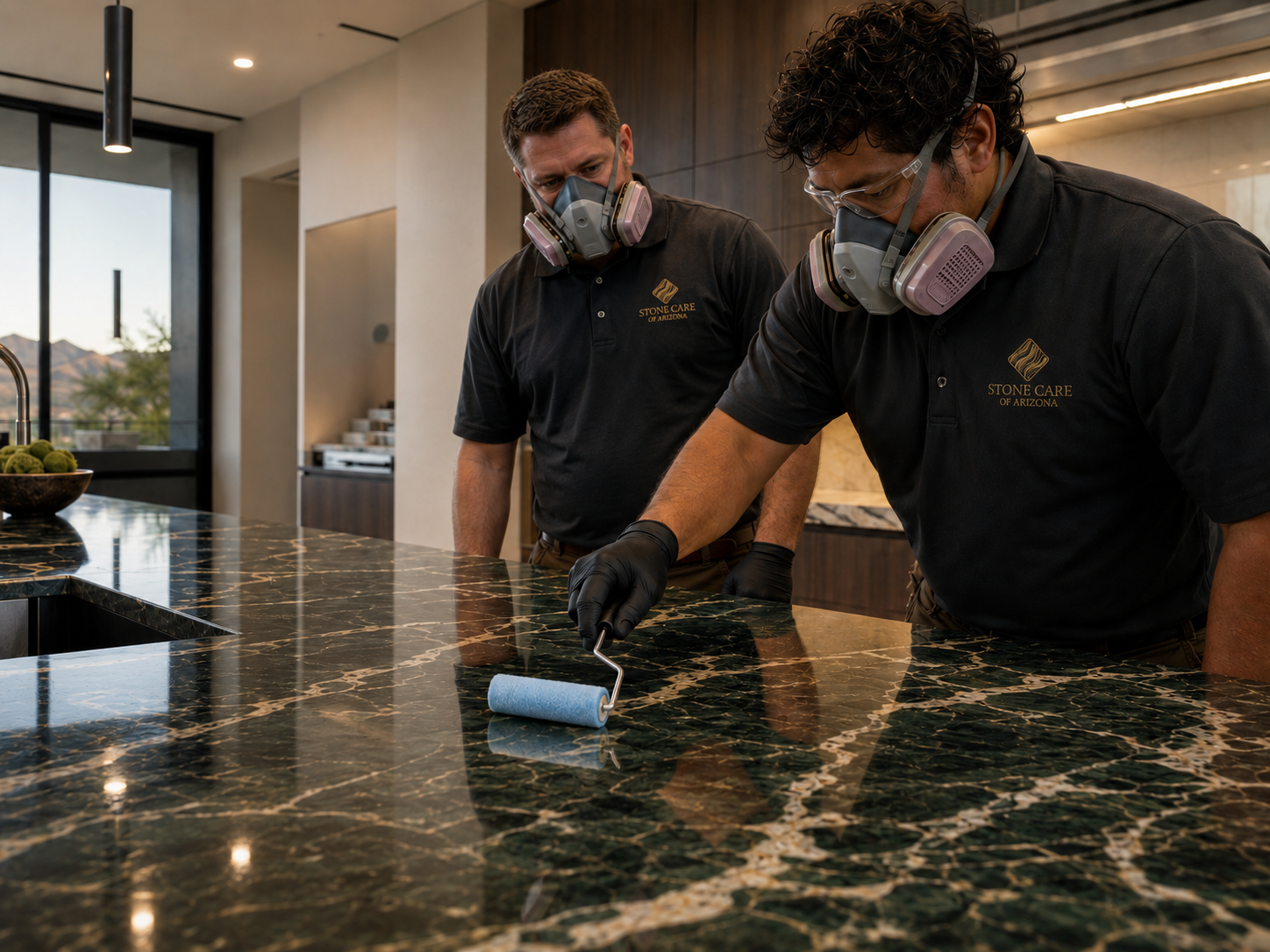
Sealing does not prevent etching, because a sealer slows absorption and etching dissolves the surface itself. What sealing does protect against, and what does not.

Chips, hairline cracks, and missing corners in granite are usually repairable in place with a color-matched fill. A repair is a blend rather than an erasure, and how close it gets depends on your stone.

White powder on a paver patio is one of three different things, and only one is efflorescence. Cleaning addresses how efflorescence looks and does not cure it, because the cause is a moisture source.
.jpg)
Grout goes back to looking dirty for one of three reasons, and only one of them is dirt. This post draws the line between grout that needs cleaning again and grout where cleaning is no longer the answer.
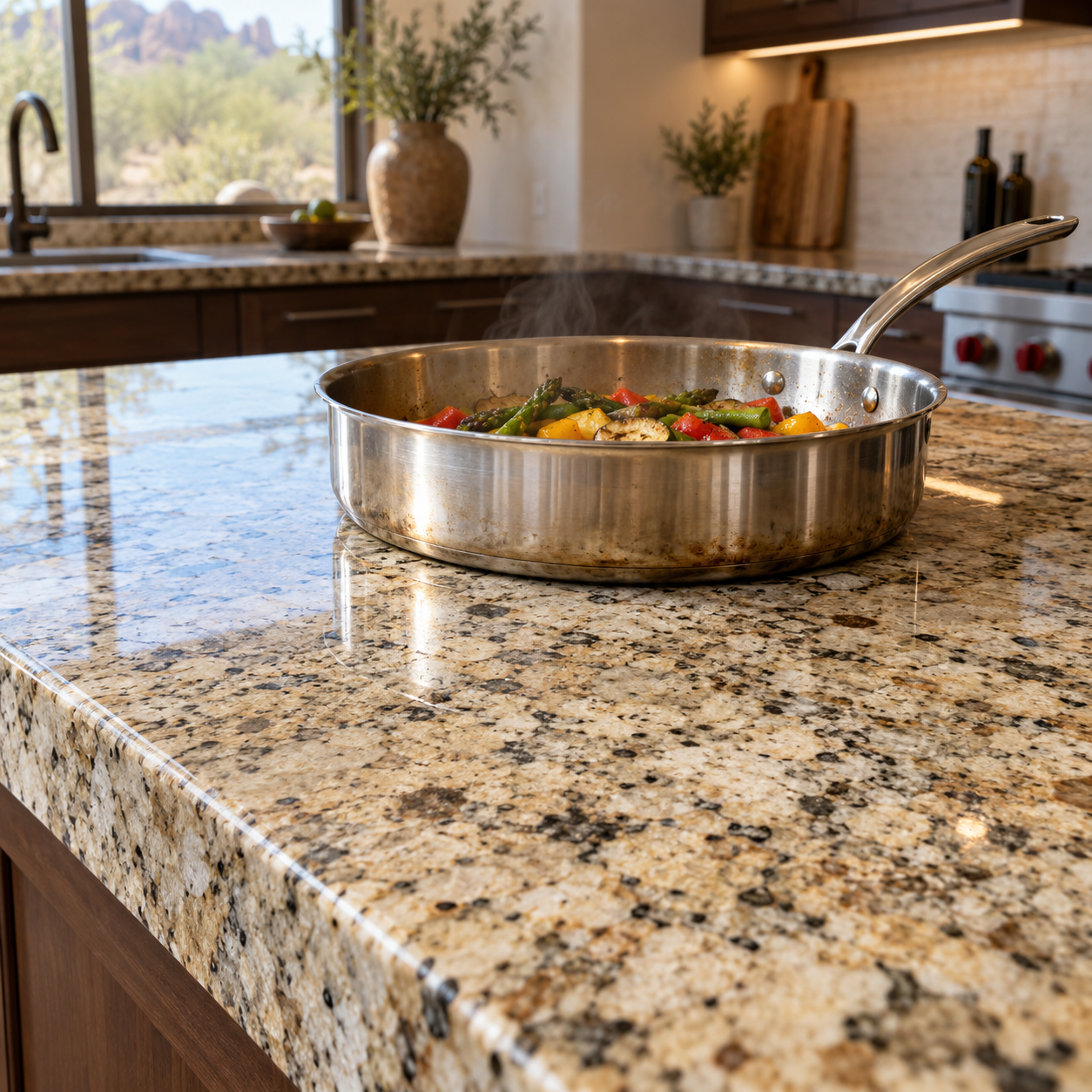
Granite handles heat better than almost anything else in a kitchen, and the real risks are thermal shock at a natural fissure and a sealer that fails in one spot. Quartz, marble, and porcelain answer the same question differently.

Dull rings on marble are etch marks, not stains, and they form in seconds. Why wiping fast does not stop them and what actually does.
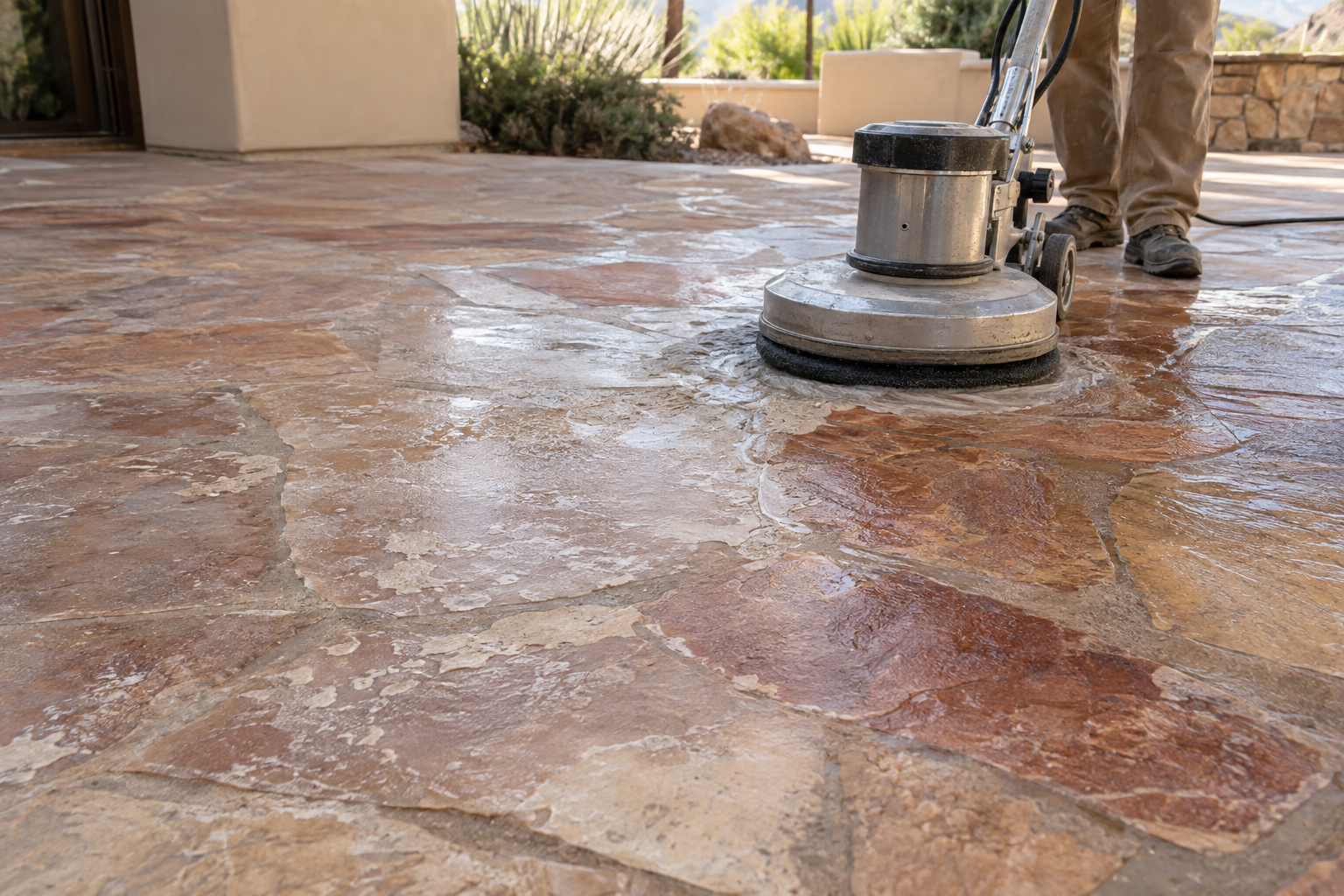
Flaking flagstone is either a coating on top failing or the stone surface spalling because moisture is trapped behind it. Flagstone is extremely porous, and that one property explains nearly everything that goes wrong with it.
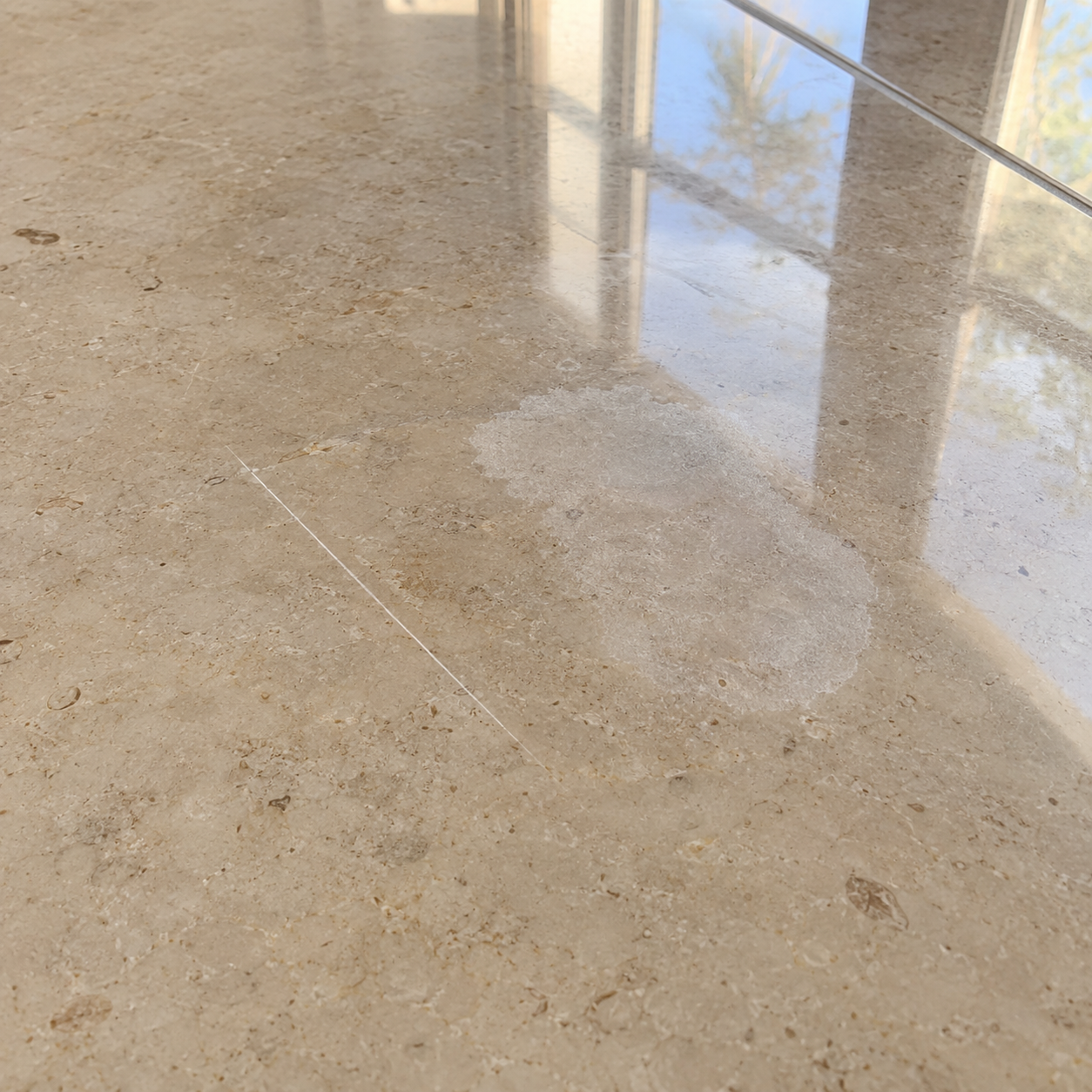
A scratch is a groove cut into the stone and an etch is missing surface from acid. Here is how to tell them apart on a floor, plus the third possibility most homeowners miss.
Bleach will not fix a travertine floor that reads as dirty, and it can permanently lighten grout. What it actually does, and what to use instead.
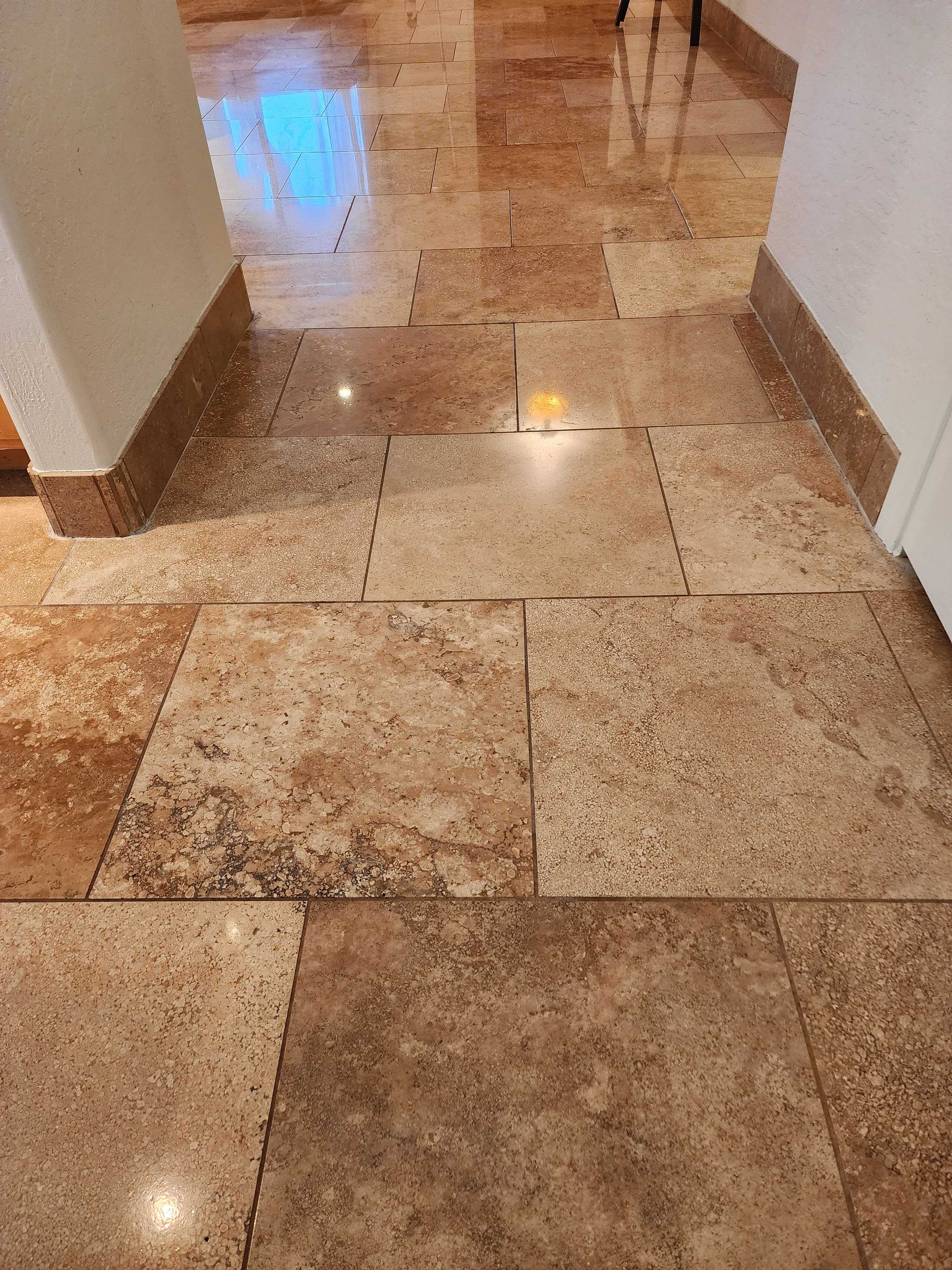
What travertine needs in the desert: how to clean it day to day, when to reseal, and the habits that keep Arizona travertine floors looking new.
Six topics cover everything we write about. Start with the one that matches what your surface is doing.
Stone 101 is the place to start if you are not sure what you own. Marble, travertine and limestone are calcium-based and react to acid. Granite and quartzite are harder. Quartz is engineered rather than quarried. Which one you have changes how you clean it and what a professional can fix.
Care and Maintenance covers the day to day: which cleaners are safe, which mop to use, and the habits that keep a floor from needing restoration in the first place.
Cleaning and Sealing explains what professional cleaning reaches that mopping cannot, how to tell when a sealer has stopped working, and what sealing does and does not protect against.
Polishing and Restoration is for damage rather than dirt: etch marks, scratches, dull traffic lanes, chips and cracks, and what honing and polishing each actually do.
Tile and Grout covers grout that still looks dirty after cleaning, color sealing, and showers with scale, soap scum and growth in the caulk.
Outdoor Stone is the Arizona-specific one: patios, pool decks, flagstone and pavers under monsoon dust, hard water and full sun, including peeling sealers and white efflorescence.