


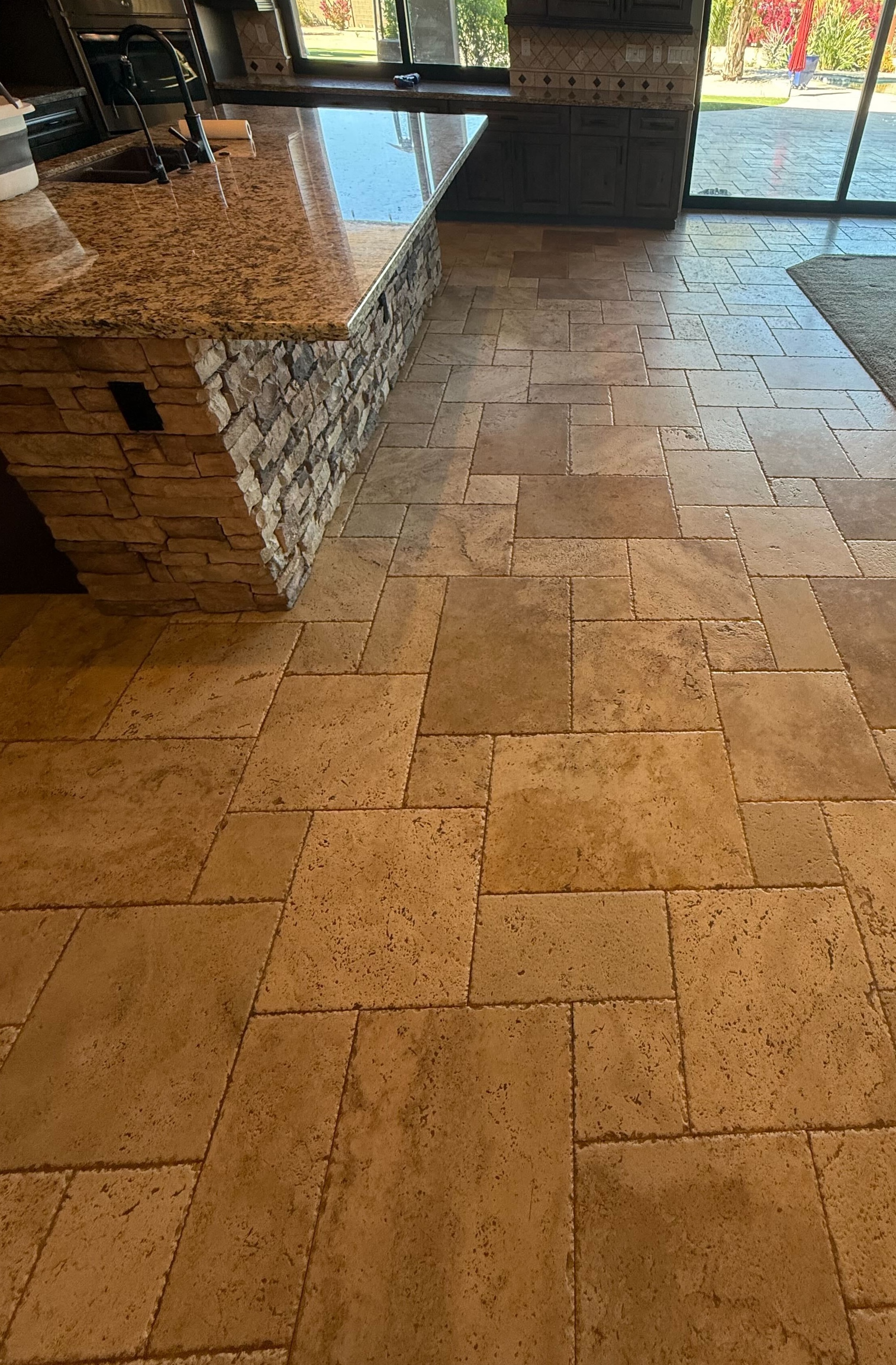
Travertine holes are natural formation, not damage. The real question is whether your floor was installed unfilled on purpose or has lost its factory fill, because the answer changes the recommendation.
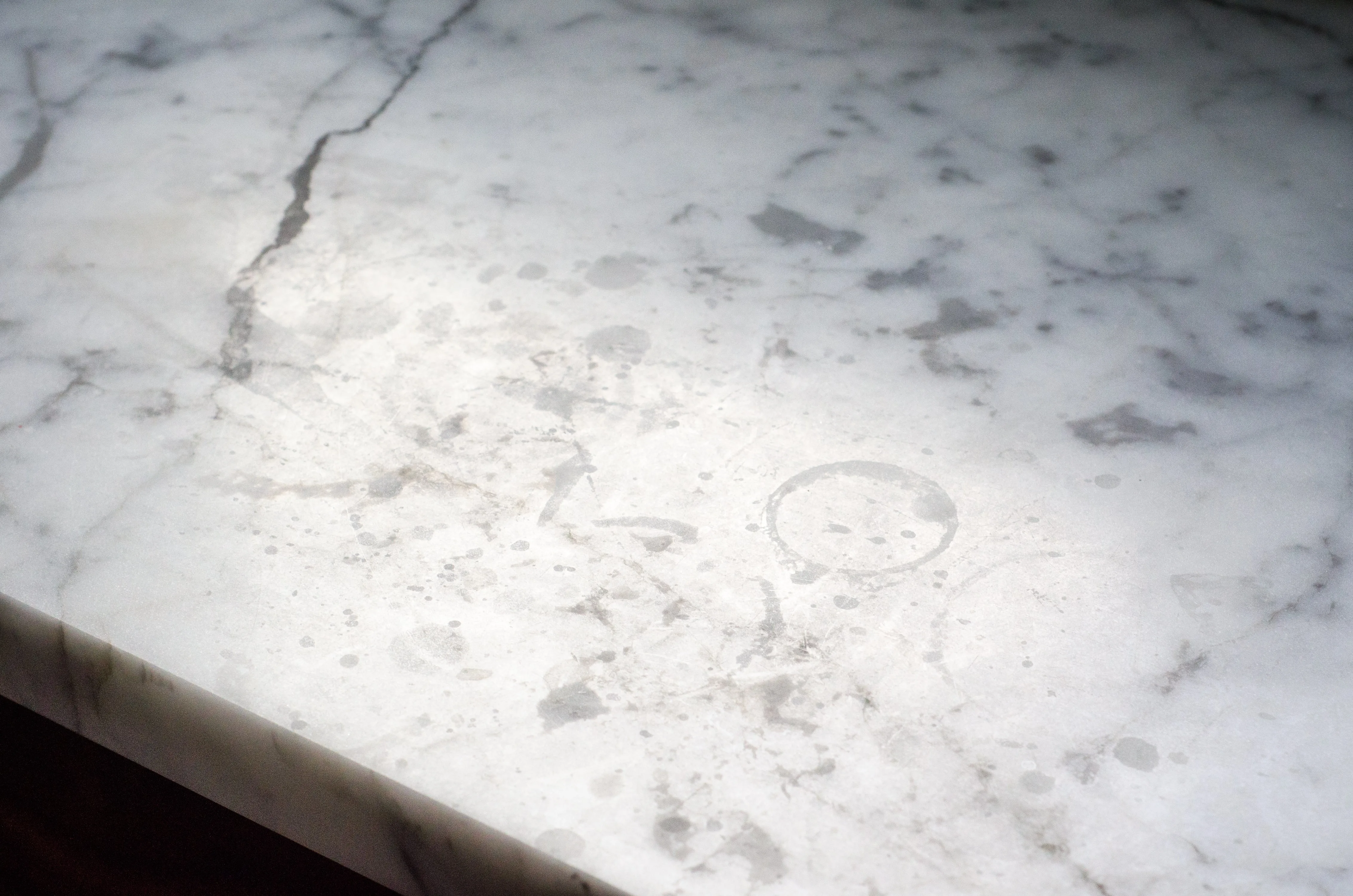
Most water spots on a marble countertop are etch marks, not spots. A ten-second check separates an etch from calcium buildup and from a stain.

Chips, hairline cracks, and missing corners in granite are usually repairable in place with a color-matched fill. A repair is a blend rather than an erasure, and how close it gets depends on your stone.

Dull rings on marble are etch marks, not stains, and they form in seconds. Why wiping fast does not stop them and what actually does.
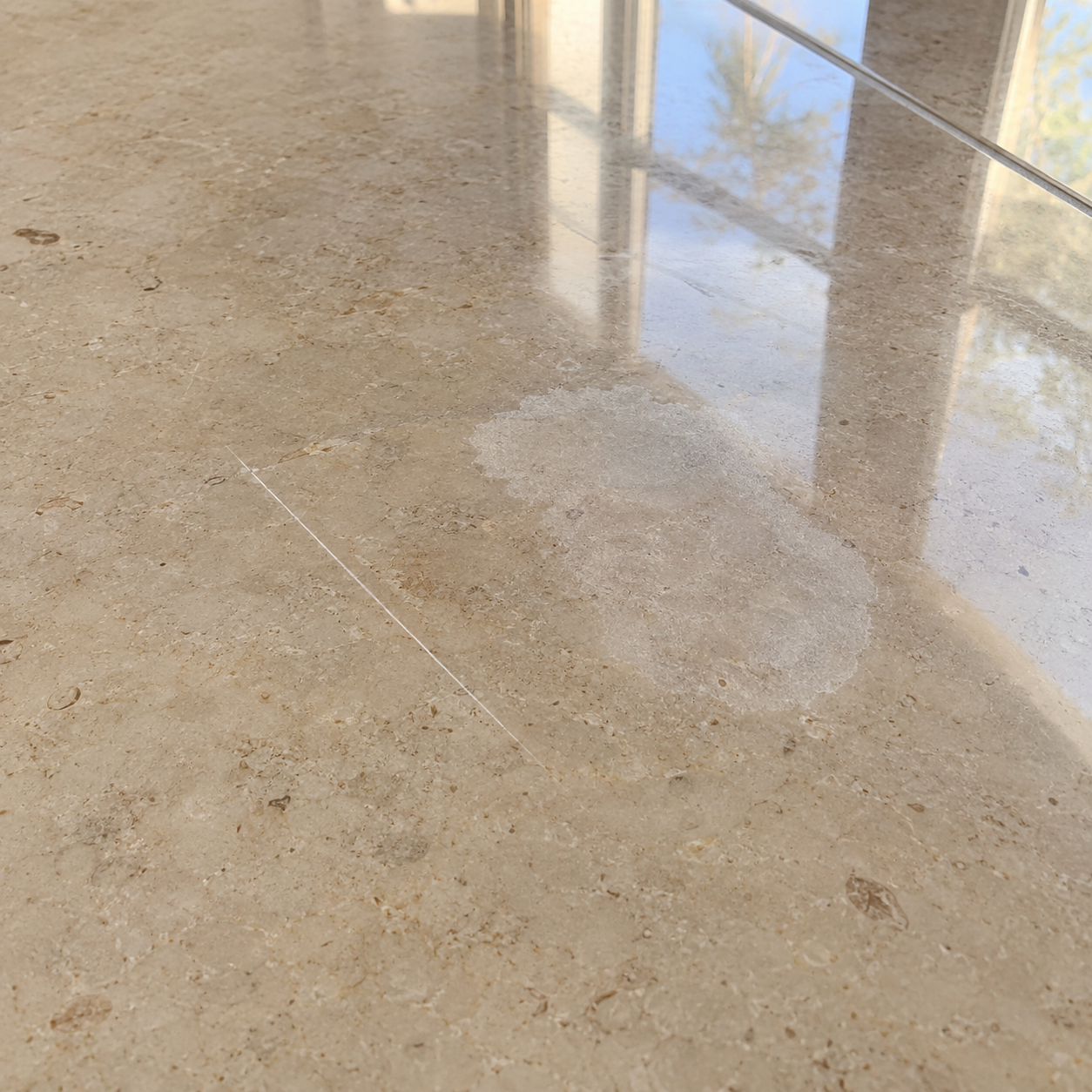
A scratch is a groove cut into the stone and an etch is missing surface from acid. Here is how to tell them apart on a floor, plus the third possibility most homeowners miss.
Not sure this is the right topic? Three questions usually sort it out. First, what is the stone? Marble, travertine and limestone are calcium-based and react to acid, granite and quartzite are harder, and quartz is engineered rather than quarried. Stone 101 covers that.
Second, is the surface dirty or damaged? Soil sitting in travertine pits or grout lines is a cleaning problem, and Cleaning and Sealing explains what professional extraction reaches that mopping cannot. A mark you can feel with a dry fingertip is missing stone rather than dirt, and Polishing and Restoration covers how honing and polishing put it back.
Third, where is it? Grout lines and showers are under Tile and Grout. Patios, pool decks, flagstone and pavers are under Outdoor Stone, where Arizona sun, monsoon dust and hard water change the answers. Everything about keeping a surface from getting to that point is in Care and Maintenance.
If you would rather have someone look at it, Stone Care of Arizona provides free in-home estimates across Scottsdale, Paradise Valley, Cave Creek, Carefree and Fountain Hills. Request a free estimate or call (480) 625-0557.


